
With audits and greater emphasis on anti-evasion measures, more tax demands will lead to more litigation. So, it is a bit early to start celebrating. GST is still work in progress.

A final call will be taken by Congress president Sonia Gandhi on Thursday.

A GST roll-out by April 1 looks difficult, giving the companies some succour.

The much awaited new indirect tax regime Goods and Service Tax (GST) is unlikely to be implemented from the scheduled date of April 1, 2011, a top government official said on Tuesday.
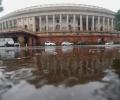
The monsoon session of Parliament is likely to begin in the third week of July and end by mid August.

Telecom services providers have urged the Ministry of Finance to suspend the universal service obligation (USOF) till the existing corpus is exhausted. In their Budget recommendations, they have also pressed for an exemption from the service tax on "assignment of right to use natural resources" and the slashing of Customs duty on telecom equipment to zero. The Cellular Operators Association of India (Coai), which represents private sector telecom operators Reliance Jio, Bharti Airtel, and Vodafone Idea, called for abolishment of USOF levy.

The Constitution amendment bill for roll-out of GST is pending in Rajya Sabha for a long time.
Despite a steady collection rate, the government faces a steep Budget target of Rs 6.1 trillion for CGST for 2019-20.

Till such time that a new governance framework comes into being, the progress of reforms in health, education, land, labour, electricity and agriculture could remain fraught with problems, agitations and delays, observes A K Bhattacharya.

GST making you anxious? Here is a fact-check on how new tax will impact you.

The government of India holds 24.5 per cent stake in GSTN while states together hold another 24.5 per cent
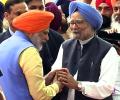
Whether it was the MGNREGS or the NFSA or the Aadhaar-based DBT scheme for cash transfer, the Modi government has built on the basic architecture created by the Singh government. Policy makers in the Modi government, instead of discarding them as products of the previous political regime, worked on them, expanded their scope and reach, and used new tools to improve their performance, explains A K Bhattacharya.

Most say they will review their Make in India plans as prices may top pre-GST level

Though the intent has been hailed as good for the economy, teething problems remain with a five-rate structure for various goods and services

An increase in the farmer income support scheme PM Kisan Nidhi, the introduction of a 'robot tax' to fund reskilling of people who lose their jobs to artificial intelligence (AI), and a reduced income-tax (I-T) to bring relief to the middle classes - these are some of the items in the Budget wish list submitted by Sangh Parivar affiliates to Finance Minister (FM) Nirmala Sitharaman. Representatives of the affiliates of the Rashtriya Swayamsevak Sangh (RSS), such as the farmer organisation Bharatiya Kisan Sangh (BKS); trade union Bharatiya Mazdoor Sangh (BMS); Laghu Udyog Bharati, which works for micro and small industries; and Swadeshi Jagran Manch (SJM), which works on economic and policy issues, met the FM and other officials over the last couple of weeks as part of the pre-Budget consultations.

The passage of the bill will pave the way for setting up of a GST council that will decide the tax rate, cess and surcharges.
Response to Rahul yatras in Gujarat forced GST cuts, says Congress. It reflects Modi's willingness to listen, says BJP.

The GST bill was earlier planned to be introduced from April 1.
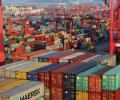
Currently, the five-year FTP aims to raise total exports to $900 billion but targets may be reduced
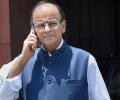
Manufacturing taxes, VAT will come down, assures Jaitley

The council, headed by Finance Minister Arun Jaitley, will meet again on December 11 and 12 to hammer out the differences.

Consumer products like mobile phones and laptops may become cheaper as the overall taxes on goods are likely to come down
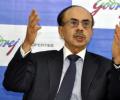
Noting that there is a huge potential in the agricultural sector, he said value added production through processing could add considerably to the economic growth.

The GST, an indirect tax regime, is to be rolled out from April 2016.
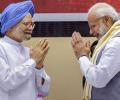
In a scathing attack on Prime Minister Narendra Modi, former prime minister Manmohan Singh on Thursday accused him of lowering the dignity of public discourse and the gravity of the office of the PM by giving "hateful speeches" during the poll campaign.

'GST will bring in much needed transparency and higher investments in the coming years and we hope that a few percentage points to India's GDP.'

TVs, air conditioners, washing machines, inverters, refrigerators, electric fans and cooking appliances may become cheaper

'It is not simply demonetisation or GST, it is this government's failure to manage the financial sector crisis.'

The Congress will respond comprehensively only after specificity emerges in the proposals, reports Amit Agnihotri.

The government said it was willing to advance the upcoming Parliament session.

The Congress on Monday stepped up its attack on the BJP-led Centre over the issue of price rise with Rahul Gandhi saying the biggest problems facing the country were unemployment, inflation and growing hatred.
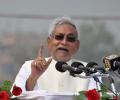
Bihar became the first non-NDA state and overall second after the BJP-ruled Assam to pass GST bill.
A slew of challenges that are yet to be resolved include the lack of consensus between the Centre and states over the GST exemption threshold limit, dual control over scrutiny and assessment

GST was 'flawed' and had unleashed a 'tsunami of tax terrorism', he said.

Modi campaigned on the issue of national security, which cannot be ensured without a strong economy.

The Council also discussed process to make return filing simpler with just one return to be filed every month.

'Efforts to roll out GST from next fiscal'
Centre, states clear first hurdle, agree on compensation formula for losses on account of reduction in Central Sales Tax rate.

The forthcoming Budget, the last full one before the 2019 Lok Sabha elections, is expected to contain a number of sops and feel-good announcements, especially regarding social sector schemes.
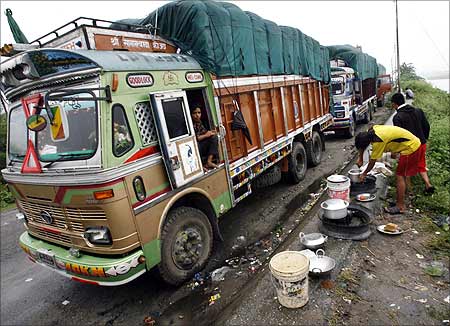
The Cabinet on Wednesday approved amendments to the GST bill to compensate states for revenue loss for five years on introduction of the uniform nationwide indirect tax regime.
